Showing posts with label education. Show all posts

Tuesday, January 6, 2026

How to Use Technology with Intention So You Can Stay Grounded, Present, and Spiritually Connected

Webmaster Note: Guest Post by Sara Bailey from TheWidow. The views and opinions expressed in the article are those of the author, and may or may not necessarily reflect those of ad Dei Gloriam Ministries.

In a culture defined by speed and distraction, technology often becomes the noise that drowns out the still, sacred voice within. Yet, when used prayerfully, it can also become the tool that helps us return to stillness, to presence, and to God. This is not about rejecting devices but redeeming them, so that every click, swipe, and creation can serve the renewal of your soul.

Most of us spend large parts of our day connected, reading, responding, or simply scrolling, often without realizing how much of our attention has been given away. The challenge isn’t just how much time we spend online, but how rarely we pause to ask whether that time restores or depletes us. The pace of digital life can quietly erode reflection, making stillness feel inefficient and prayer feel optional. This isn’t a moral failure, it’s the nature of our environment. But followers of Christ are called to live by intention, not impulse. Reclaiming digital time begins by treating attention as a sacred resource, something to be offered purposefully, not consumed casually. Here are small ways to begin:

Webmaster Note 2: Many people believe that the various types of media and technology are inherently evil. The truth is that most of the various platforms, in and of themselves, are actually neutral. It is how media is used that results in it being good, bad, or neutral. In her article, Sara provides many good tips on using media for good.

Read the entire article on our Original Blog.

Wednesday, December 17, 2025

Beyond Homework: Creative After-School Paths for Christian Families

Webmaster Note: Guest Post by Sara Bailey from TheWidow. The views and opinions expressed in the article are those of the author, and may or may not necessarily reflect those of ad Dei Gloriam Ministries.

Christian families are often looking for after-school activities that nurture faith, curiosity, and character at the same time, without feeling like an extension of the school day. The familiar options—sports teams, tutoring, church youth group—can be wonderful, yet many parents sense there is more out there. The deeper challenge is helping children discover God’s world as wide, surprising, and full of callings they haven’t imagined yet.

Read the entire article on our Original Blog to learn how to encourage children to enjoy faith-friendly activities that stimulate learning without compromising your family and Christian values.

Monday, December 8, 2025

Nurturing Wonder: Helping Children Grow into Self-Motivated, Faith-Filled Learners

Webmaster Note: Guest Post by Lucille Rosetti from The Bereaved Blog, a valuable independent contributor to our blog. The views and opinions expressed in the article are those of the author, and may or may not necessarily reflect those of ad Dei Gloriam Ministries.

Children are born curious. They touch, ask, and imagine; not to test your patience, but to understand the world God made. For Christian parents, this curiosity isn’t something to control, it’s something to steward. When shaped with love and faith, it becomes the foundation of wisdom, confidence, and lifelong learning. Read the entire article on our Original Blog. This article contains many excellent learning tips for children and their parents and/or teacher. It addresses such important subjects, such as curiosity, learning tips, study habits and much more.

Wednesday, November 26, 2025

Fox Business Host Declares Thanksgiving is a Secular Holiday

While flipping TV channels this morning, I happened upon Stu Varney's "My Take" on the Fox Business Network. He was speaking of the Thanksgiving holiday. Here is a transcribed exerpt:

"Thanksgiving is a uniquely American celebration. Everywhere else in the world, it is just Thursday. But here, it's a very special day. It's not a patriotic celebration, that's July 4th.

So far... so good. But then he proclaims "It's not a religious celebration. That's Christmas, or Easter for Christians. Thanksgiving is just that: a day to be thankful for the friends and family we hope to have around us.”. He then commented on typical foods, conversations and other thoughts. You can watch the entire two minute take at:

Stu's Take on Thanksgiving.

First, I want to note that Mr Varney is not a left-wing loon, but fairly conservative and a very likable well mannered host. But I must take exception to his comment that "Thanksgiving is not a religious celebration". This would have certainly come as a shock to the Pilgrims who celebrated that first Thanksgiving in 1621. Perhaps Mr Varney meant that it is no longer thought of as a religious holiday, since many, particularly those who have attended classes in the public school system in the past several decades, have long forgotten the true original meaning of the holiday. In that, he would certainly be correct.

In addition, I want to recognize and thank Mr Varney for acknowledging Christmas as a religious holiday. For the majority, Christmas, like Thanksgiving, has become a secular holiday in which the true meaning has been long forgotten. Each year, we're bombarded with so-called Christmas movies in which Jesus Christ has been replaced with Santa Clause, without even a hint of its true meaning. For those who would like to know more about our country's true Biblical Christian roots, we invite you to check out some of our previous writings.

America’s Christian Heritage.

Biblical Roots of America’s Thanksgiving Holiday.

Hope everyone has a very Happy and Blessed Thanksgiving!

Tuesday, August 19, 2025

Finding Light in the Middle Years: A Christian Journey Through Crisis

Guest Post by Lucille Rosetti from The Bereaved Blog. The views and opinions expressed in the article are those of the author, and may or may not necessarily reflect those of ad Dei Gloriam Ministries. We have no relationship with any of the organizations linked within the article.

Caution!!! Links in this article are provided by the guest author and may link to Content Marketing / Native Advertising and other sites containing first and third party ad trackers and cookies, along with other privacy threats such as passing on your info to social media sites. We urge our readers to take precautions such as using privacy browsers, ad-blocking apps, VPNs, anti-tracking devices, disabling third-party cookies and other appropriate measures before clicking on any external links.

Image Source: Pexels
hand-opening-bible A mid-life crisis can feel like a private storm, one that shakes your sense of purpose and unsettles your relationships, faith, and vision for the future. For Christians, it can be a strange and sometimes lonely place to stand — caught between what’s been built and what’s still unfinished. The good news is that God’s Word and the lived wisdom of believers offer not just comfort, but a path forward. Inspiration isn’t a magic spark that appears in perfect moments; it’s something we cultivate in the middle of difficulty. Positivity is not a shallow optimism, but a steadying trust that God can work good out of the most uncertain seasons. These years can become a refining fire, not a dead end.

Embrace Your Faith

Some moments in life press us hard enough to make us listen in ways we’ve avoided before. A mid-life crisis can be just that — a divine nudge to re-center your life on what truly matters. Instead of interpreting the struggle as pure loss, consider what if your midlife crisis is a wake-up call to slow down and hear God’s voice in the noise. Scripture is full of people who faced turning points in the middle of their story: Moses at the burning bush, David in the caves, Paul on the road. Each found new strength and direction by trusting God’s leading rather than clinging to their old plans. Allow prayer and the Word to become not just a daily habit, but a place where your new season begins to take shape.

Practical Life Tools

Sometimes the most immediate relief in a stressful season comes from removing small daily frustrations. For example, reducing tech-related headaches can create more mental space for prayer, rest, and focus. Knowing a few ways to convert files to PDF without fuss can cut down on wasted time at work or in ministry prep. These small efficiencies, though they seem unrelated to spiritual renewal, can clear away unnecessary stress so your mind and heart can attend to bigger, more eternal matters.

God’s Steadfast Keeping

There’s comfort in knowing that your stability isn’t dependent on your own grip. As life shifts and questions pile up, resting in God’s steadfast keeping anchors your hope in something unshakable. He is the one who carries you through — not your willpower, not your strategies, but His faithful character. This truth dismantles the fear that you’ll somehow “fail” at navigating this stage. It reminds you that your life is held by hands far stronger than your own, and that every season is within His reach.

Education as a Reset Path

For some, a mid-life crisis is tied to career dissatisfaction or a longing for new challenges. In such cases, pursuing further education can serve as a practical and hope-filled step forward. Exploring the IT bachelor of science degree requirements might open doors to fresh vocational opportunities, providing both a mental reset and a renewed sense of purpose. Learning something new can reignite confidence, expand your community, and create pathways for service you hadn’t considered before.

Find Community & Serve

Isolation has a way of distorting reality. When you serve alongside others, even in small ways, you see that you’re part of a much bigger story than your personal crisis. By letting service reshape your outlook, you open yourself to encounters that shift your perspective and remind you of God’s work in the world. Volunteering at your church, mentoring a younger believer, or joining a local outreach effort puts you shoulder to shoulder with people who also need encouragement. This shared work pulls you out of self-focus and into God’s mission, often bringing joy you didn’t know you’d lost.

Recalibrate Rather Than Collapse

The temptation during a mid-life crisis is to see it as a collapse, a sign that something’s irreparably broken. But it can also be a point to pause and intentionally shift course. You might start steering mid-life recalibration with intention by asking questions about your calling, habits, and the priorities you’ve set over the years. This isn’t about tearing your life down but about refining it — clearing space for the commitments and people who matter most. By approaching this time as a God-led audit, you replace panic with purpose and turn uncertainty into fertile ground for growth.

Creative Renewal

In the thick of change, creativity can become an unexpected lifeline. Mid-life offers the chance to rediscover or develop practices that connect you with God in fresh ways. Some believers find that rediscovering faith through creative practice — whether through painting, gardening, writing, or music — opens new channels for prayer and reflection. Creative acts invite you to slow down, notice beauty, and see God’s hand in the process of making. The act itself becomes a form of worship, a way of honoring the Creator by imitating His inventiveness.

A mid-life crisis doesn’t have to be a breaking point; it can be a turning point. The years ahead can be shaped by faith that listens closely, service that connects deeply, and creativity that refreshes the spirit. Let God’s keeping power steady you, let practical shifts lighten your load, and let purposeful steps guide you toward what’s next. The season you’re in now might hold the seeds of your most meaningful growth — not because it’s easy, but because God is working through it. And that truth, in the end, is where both inspiration and positivity find their deepest roots.

Friday, June 27, 2025

Summer Unscripted: Fresh Ideas for Kids to Learn, Grow, and Explore

Webmaster Note: Guest Post by Lily Tamrick from The Parent Hubspot. The views and opinions expressed in the article are those of the author, and may or may not necessarily reflect those of ad Dei Gloriam Ministries. We have no relationship with any of the organizations linked within the article.

Caution!!! Links in this article are provided by the guest author and may link to Content Marketing / Native Advertising and other sites containing first and third party ad trackers and cookies, along with other privacy threats such as passing on your info to social media sites. We urge our readers to take precautions such as using privacy browsers, ad-blocking apps, VPNs, anti-tracking devices, disabling third-party cookies and other appropriate measures before clicking on any external links.

Image Source: Pexels
Girl Picking Flowers Summer arrives with a promise of freedom and discovery, but for many parents, that promise quickly morphs into a logistical challenge. How do you keep your child engaged when school’s out, screens beckon, and neighborhood options wear thin by mid-July? If you’re a parent either struggling to find options or just hoping to go beyond the expected, there are plenty of creative, enriching paths to explore. These activities can spark curiosity, build confidence, and introduce your child to new possibilities—all while keeping summer fun and fresh.

Supporting Artistic Expression

Children are natural creators, and summer is the perfect time to let them embrace their inner artist. Enroll them in a local community center art class or supply them with the tools to dive into at-home projects. Think beyond crayons and coloring books—introduce them to pottery, abstract painting, or collage-making from recycled materials. The goal isn’t to create masterpieces but to give kids permission to explore self-expression in vibrant, unstructured ways.

Creating Art with AI Tools

As technology blends with creativity, AI-generated art is quickly becoming one of the most exciting new avenues for self-expression. Your child can type in a prompt to create an image, then customize the style, colors, and lighting to make it their own. Handy online tools offer ways to generate AI art that can be printed, displayed, or even turned into comic books or cards. This activity blends digital literacy with imaginative thinking, and it’s perfect for kids interested in both tech and visual storytelling.

Coding Isn’t Just for Adults

You don’t need to wait until high school to introduce your child to coding. Platforms like Scratch, Tynker, and Bitsbox make programming accessible, playful, and rewarding for even elementary schoolers. Coding builds problem-solving skills and encourages your child to think logically while creating their own games, stories, or animations. Plus, it’s a quiet activity that still feels like screen time, which is often a win-win scenario for kids and parents alike.

Giving Them the Stage

While some kids are shy, others love the spotlight—and theater arts offer a unique outlet for both. Drama workshops, improv classes, and puppet-making groups give children a space to practice empathy, storytelling, and self-confidence. If there’s no theater camp nearby, try homegrown alternatives: help them write a script and stage a backyard production with neighbors or siblings. It’s a collaborative process that can help children understand different perspectives and think creatively on their feet.

Encouraging Entrepreneurism

Even young kids can dip a toe into the world of small business with surprisingly rewarding results. Instead of the traditional lemonade stand, encourage your child to brainstorm services they can realistically provide pet-sitting, car washing, tech help for grandparents, or tutoring younger peers. Walking them through simple budgeting and marketing not only develops math and communication skills but instills a deep sense of ownership. A summer venture like this can spark a lifetime of self-starter mentality.

Volunteering as a Family

Getting your child involved in volunteer work teaches compassion, responsibility, and perspective. Look for family-friendly opportunities like sorting donations at a food bank, reading to seniors, or walking dogs at a local shelter. Some organizations even run youth-focused programs that combine volunteering with learning modules and peer collaboration. When kids give their time for something bigger than themselves, they come away with more than a line on a college resume—they grow as humans.

Leveraging the Magic of Gardening

You might not think of gardening as a high-energy summer activity, but it taps into both science and patience in deeply fulfilling ways. Give your child a small patch of soil or a few containers, and let them grow herbs, vegetables, or flowers from seed. In caring for something living, kids learn consistency, observation, and environmental stewardship. Watching something sprout and bloom under their care gives them a quiet sense of pride that's hard to match.

Instead of viewing summer as an obstacle, it helps to see it as a blank canvas. Whether your child is curious about languages, plants, tech, or performance, there’s a way to harness their interests into something memorable. These months can foster emotional growth, academic development, and lifelong passions if given the right outlets. And when the first day of school rolls back around, your child won’t just return older—they’ll come back transformed.

Thursday, June 19, 2025

The Stewardship of Knowledge: Why Lifelong Learning Matters for Christian Community Leaders

Webmaster Note: Guest Post by Lily Tamrick from The Parent Hubspot. The views and opinions expressed in the article are those of the author, and may or may not necessarily reflect those of ad Dei Gloriam Ministries. We have no relationship with any of the organizations linked within the article.

Caution!!! Links in this article are provided by the guest author and may link to Content Marketing / Native Advertising and other sites containing first and third party ad trackers and cookies, along with other privacy threats such as passing on your info to social media sites. We urge our readers to take precautions such as using privacy browsers, ad-blocking apps, VPNs, anti-tracking devices, disabling third-party cookies and other appropriate measures before clicking on any external links.

Image Source: Pexels
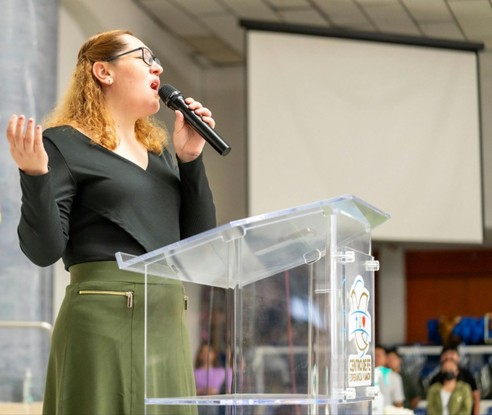
Woman at Podium In your calling as a Christian community leader, you're tasked with the sacred responsibility of shepherding souls, resolving conflict, offering guidance, and cultivating unity. But leadership doesn’t end at the pulpit or the meeting table. Today’s most impactful leaders are those who continue to evolve—spiritually, emotionally, and intellectually. Lifelong learning is not just a secular virtue; it's a biblical imperative. Paul urged Timothy to “study to show thyself approved,” a timeless reminder that discipleship and learning are inseparable. And in a fast-changing world where the needs of your community shift almost daily, keeping pace isn’t optional—it’s essential.

Biblical Foundations for Continuous Growth

Before diving into the practical benefits, it’s worth acknowledging the scriptural roots of lifelong learning. Proverbs is brimming with exhortations about the value of wisdom, knowledge, and instruction. “Give instruction to a wise man, and he will be still wiser” (Proverbs 9:9). From Moses learning how to lead from his father-in-law Jethro, to the disciples undergoing transformation under Christ’s daily teaching, the Bible is a rich tapestry of lifelong learners. Your journey as a leader echoes this same path—learning not for vanity, but for service.

Preventing Stagnation in a Dynamic World

Even the most devout leader can become stagnant if they rely solely on past experiences. Ministries that once thrived may falter if leaders aren't adapting to new technologies, emerging needs, and cultural shifts. Lifelong learning keeps your vision fresh. It encourages curiosity, humility, and relevance—traits that your congregation and community instinctively recognize and respect. When you embrace education, whether formally or informally, you send a clear message: leadership is a posture of growth, not arrival.

Earning a Degree to Advance Your Skills

For many leaders, formal education can be the key that unlocks the next level of impact. Earning a degree is not just about a piece of paper; it's about deepening your toolkit. A business degree, for example, equips community leaders with strategic, financial, and organizational skills to effectively manage resources, drive local initiatives, and create sustainable economic impact. Online degree programs make it easier to juggle learning with your ministry and personal priorities. If this speaks to you, try this: research flexible university programs that cater to working professionals—you might find the perfect fit to sharpen your calling.. Check them out and you might find the perfect fit to sharpen your calling.

Learning Enhances Empathy and Interpersonal Skills

At the heart of ministry is people. And people are nuanced, complicated, and ever-changing. Whether you're navigating a counseling session or a heated board meeting, deeper understanding—especially of psychology, sociology, and conflict resolution—can be invaluable. Lifelong learning broadens your empathy. You start seeing situations from multiple angles, often disarming tension before it escalates. You become a better listener. From Moses learning how a better listener, a more thoughtful speaker, and ultimately, a more effective bridge between individuals and God.

Expanding Outreach Through Digital Literacy

In the digital age, your reach is no longer limited to a building or ZIP code. Mastering tools like social media, livestreaming, email marketing and even podcasting can help extend your ministry’s influence. Lifelong learning in tech doesn't require becoming an expert coder. It just means being open to new platforms that help you communicate timeless truths in timely ways. Imagine the impact of a virtual Bible study attended by believers from across the country—or even the world. Digital literacy is one of the most underutilized but powerful resources at your disposal.

Developing Leadership Capacity in Others

One mark of a great leader is their ability to grow other leaders. But you can't give what you don't have. By modeling a commitment to learning, you encourage your congregation and team members to do the same. You show them that education isn’t something you “finish” at 22—it’s a lifelong discipline. Whether it’s through book clubs, seminars, mentoring programs, or mentoring programs. From Moses learning how collaborative study, you set a tone that fosters maturity, ownership, and accountability. This ripple effect can fortify your entire ministry.

Navigating Change with Wisdom and Courage

Communities evolve. Economic shifts, social justice movements, political tensions, and generational divides are all realities you have to confront with grace and discernment. Lifelong learning equips you to do that with more than gut instinct. From Moses learning how more than gut instinct. It gives you frameworks, case studies, data, and context. You won’t just react—you’ll respond. That subtle but profound difference is what sets a wise leader apart from a merely well-intentioned one. And the people you serve will feel the steadiness that education can help instill.

Leadership in the Christian community is a high calling—and it deserves a high level of preparation. The old models of “one and done” seminary degrees or relying on Sunday-only insight no longer suffice in a world where people are looking for relevance, clarity, and authenticity. Lifelong learning is not about chasing credentials; it’s about staying tender to the Holy Spirit, adaptable to the times, and faithful to your mission. Whether through formal degrees, reading widely, attending workshops, or simply staying curious, you answer the call not just to lead—but to grow. And in that growth, you multiply your impact in ways you may not yet imagine.

Saturday, March 3, 2018

Finding The Right School Before Moving

Guest Post by Tilda Moore of OpenEducators:

Note: The views and opinions expressed in this article are those of the author and may not necessarily reflect those of ad Dei Gloriam Ministries.


Whether it’s because you found a great job or you just want to change where you live, you are planning a big move. With all the work you have to put into finding the house, hiring movers, and dealing with mortgages, it’s easy to forget about finding the right school.

Image Source: Pixabay
girl studying Your kids’ school will have a huge effect on their development both in terms of education and social life. You make friends for life in school, and it obviously impacts your college chances. That’s why it pays to find the right school before moving. You need to start by looking at where the schools are in your new hometown.

The Neighborhood Matters

Urban planning and school district boundaries cannot be perfect. That means you can find a great house and still have a bad school. That’s why you have to look at the neighborhood where the school is at as well as your new home.

The New York Times explains that the longer your children go to school in a bad area, the worse things get for them. The quality of a neighborhood affects those who live in it. Since your kids spend so much of their time at school, that area can mean more than where your home is located.

Several questions you have to ask about the school’s immediate area are:

  1.   Is there a lot of graffiti?
  2.   Are there abandoned buildings nearby?
  3.   Do you see many school-age children running around when school is in session?
  4.   Do you suspect illegal activity nearby?
All of these are indicators that the surrounding area is bad, which typically means the school isn’t doing well either.

Contact Them Online

Even if a school is located in a good neighborhood, that doesn’t guarantee the school itself is good. That’s why you should contact local schools before you move. Ask them about their curriculum, discipline, and funding. Although school funding isn’t always tied to student achievement, how many bad schools do you find in rich areas?

You should also make sure all teachers are certified and, for elementary schools, that recess is still offered. Young kids need recess to establish good exercise habits and burn off excess energy.

But what type of school should you look for? These days, there are often several choices for people moving into a new home. These include:

  •   Public schools
  •   Magnet schools (which are usually still public)
  •   Charter schools
  •   Religious and private schools
Some communities even offer virtual schools where students stay at home and attend classes online.

How To Change Your Mind

You did your research and found what looked like the best choice. But a few weeks or months into the school year, you start to realize that you made a mistake. That’s not uncommon as you really never know until you enroll there. What can you do?

Although the law states children must attend school, you may still have some choices. Check out the various federal, state, and local laws, or in some cases you may want to consult an attorney. Before you leave, talk to the school administration about your concerns. If they cannot be addressed, you'll probably need to send a formal withdrawal letter to the school. Then you should be able to enroll your kids elsewhere or even home-school them.

The Right School Is So Important

Admittedly, it’s hard to find a great school before you move. But there are things you can do to tip the odds in your favor. Check out the school’s neighborhood and talk to them before enrolling. You often have a choice of schools these days, so don’t be afraid to withdraw from a school that’s not working out for your kids. After all, they’re the important ones in this scenario.

Saturday, November 28, 2015

Thanksgiving Then and Now

This week, millions of Americans celebrated Thanksgiving, a Christian holiday (holy day) patterned after the first Pilgrim festival in 1621 in Plymouth. Within the next ten years, the annual celebration had spread throughout most of the New England colonies. After America’s independence from England, presidents regularly declared national thanksgiving days until 1863, when Abraham Lincoln began the annual practice of issuing a national Thanksgiving Day proclamation for the fourth day of November. Subsequent presidents continued the tradition, annually specifying various Thursdays in November. Finally, Congress permanently established the fourth Thursday each November at Thanksgiving in 1941.

For non-believers, it is relatively easy to celebrate Christmas and Easter without knowing the true meaning for each. Most see Christmas as all about Santa Claus and commemorate Easter by searching for eggs hidden by the Easter bunny. Scores of people don’t realize the Biblical Roots of Thanksgiving, but a false alternate tradition has yet to be established. It remains to be seen however, just how long this will remain the case.

During the past several decades, the godless public school systems, federalized under Jimmy Carter in the early 1970s, began systematically scrubbing the strong Christian beliefs of our country’s founding fathers (and anything else relating to the Christian faith) from the history books. Children are now taught that the Pilgrims gave thanks to the Indians instead of God (even though their first abundant harvest wasn’t until the third Thanksgiving). According to a November 23, 1986 story in the Seattle Post-Intelligencer, children were being taught that “the Pilgrims were narrow-minded bigots who survived initially only with the Indians’ help, but turned on them when their help wasn't needed anymore”.

It thus comes as no surprise that, during various man-on-the-street type interviews, we hear answers to questions about Thanksgiving such as the Pilgrims landed in Hawaii, the attendees at the first thanksgiving were “a bunch of presidents”, the first Thanksgiving was held in 1940, and many other tidbits of historical wisdom from products of our modern education system.

Just prior to this era, Democratic President John F Kennedy stated in his first Thanksgiving proclamation issued on October 28, 1961:

It is a good thing to give thanks unto the Lord.

More than three centuries ago, the Pilgrims, after a year of hardship and peril, humbly and reverently set aside a special day upon which to give thanks to God for their preservation and for the good harvest from the virgin soil upon which they had labored. Grave and unknown dangers remained. Yet by their faith and by their toil they had survived the rigors of the harsh New England winter. Hence they paused in their labors to give thanks for the blessings that had been bestowed upon them by Divine Providence…

I ask the head of each family to recount to his children the story of the first New England Thanksgiving, thus to impress upon future generations the heritage of this nation born in toil, in danger, in purpose, and in the conviction that right and justice and freedom can through man's efforts persevere and come to fruition with the blessing of God. (Kennedy Public Papers)

We’ve come a long way from Kennedy to Obama, who likes to invoke the socialist slogan “Forward”! Perhaps we’d be much better by returning to God and the traditions of our Christian Founders.