Showing posts with label health. Show all posts

Saturday, March 7, 2026

Fresh Faith-Based Ways to Boost Mental and Emotional Wellness Daily

Webmaster Note: Guest Post by Lucille Rosetti from The Bereaved Blog, a valuable independent contributor to our blog. The views and opinions expressed in the article are those of the author, and may or may not necessarily reflect those of ad Dei Gloriam Ministries.

Christians seeking mental wellness, especially theology students and believers carrying heavy ministry, study, or family loads, often feel stretched thin while still trying to trust God faithfully. The tension can be sharp: emotional wellness challenges like anxiety, numbness, or shame collide with questions about whether seeking help signals weak faith or faulty doctrine. Many also struggle to interpret Scripture in a way that comforts rather than condemns, and doubts can quietly drain hope. Faith-based mental health support can include unconventional mental health strategies and unique wellness practices that honor the soul while engaging the mind and body with gentle practicality.

Read the entire article on our Original Blog for valuable tips for improving your mind, body and spirit.

Friday, September 26, 2025

When Grief Disorients You, These Mindfulness Habits Bring You Back to Center

Webmaster Note: Guest Post by Lucille Rosetti from The Bereaved Blog, a valuable independent contributor to our blog. The views and opinions expressed in the article are those of the author, and may or may not necessarily reflect those of ad Dei Gloriam Ministries.

Caution!!! Links in this article are provided by the guest author and may link to Content Marketing / Native Advertising and other sites containing first and third party ad trackers and cookies, along with other privacy threats such as passing on your info to social media sites. We urge our readers to take precautions such as using privacy browsers, ad-blockering apps, VPNs, anti-tracking devices, disabling third-party cookies and other appropriate measures before clicking on any external links. We have no relationship with any of the organizations linked within the article.

Grief scrambles everything—your routines, your energy, even your prayers. It makes simple things hard and quiet moments unbearable. If you're someone who trusts God but still feels heavy and disoriented, that doesn't mean you're doing it wrong. It just means you're human. Mindfulness is one way to stay present when everything inside you wants to shut down or disappear. It's not about fixing anything. It's about helping you breathe through what can’t be fixed right now.

Grounding Yourself When Everything Feels Disoriented

When grief hits hard, you lose track of your body in space. You can be in a room and feel like you’re nowhere. The 5‑4‑3‑2‑1 method helps bring you back: name five things you see, four you feel, three you hear, two you smell, one you taste. It’s not a trick or a performance. It’s reinhabiting the present moment with the senses God gave you. You’re not failing your faith by grounding in the physical world. You’re honoring that you are still, in fact, here.

Calming the Storm With Rhythmic Breathing

People talk about peace that passes understanding, but sometimes you need peace that regulates your nervous system first. You can’t always pray your way out of a panic loop. Try settling your grief with rhythmic breathing like this: inhale for four, hold for seven, exhale for eight. You might think you’re doing it wrong. You’re not. It’s not about technique, it’s about inviting stillness back into a body that’s forgotten what stillness feels like.

Walking Meditation That Lets Grief Move With You

There are days when your body needs to move because your mind won’t stop spinning. Walking meditation isn’t fancy. You just pay attention as your feet hit the ground and you breathe. You can walk and stay present with grief, naming nothing, solving nothing. Don’t try to make it a spiritual exercise. Let it be physical. Jesus walked miles with people who didn’t understand what they were feeling; sometimes you need to walk too.

Writing What You Can’t Say Yet

Sometimes the words don’t come out in prayer, but they will come out on paper. Journaling doesn’t need to be eloquent, it just needs to be honest. You don’t owe anyone a polished explanation of what you’re feeling right now. If it helps, this could be useful: Preserve your journal entries by saving them as PDFs; it creates a quiet, protected archive you can revisit later. Over time, your entries start tracing a strange kind of journey, not from doubt to clarity, but from pain to presence. The page holds what you can’t say out loud yet.

Softening Self-Judgment With Loving-Kindness

Grief makes you turn on yourself sometimes; what you said, what you didn’t say, how fast or slow you're "healing." Loving-kindness meditation offers a simple sentence: “May I feel peace.” That’s it. Repeat it. No need to feel spiritual about it. When you offer yourself gentle kindness in grief, you're not erasing suffering, you’re refusing to punish yourself for feeling it. That’s not self-indulgence. That’s mercy.

Naming Feelings Without Getting Pulled Under

You’re not your grief. You’re not your anger. But if you don’t name what’s happening, it swallows you whole. There’s a mindfulness move where you name the emotion without merging into it: “this is sorrow,” “this is rage,” “this is loneliness.” Naming builds distance. Not detachment. Just enough room for the Spirit to breathe with you.

Sitting With the Ache in Quiet

Sometimes all your tools break. There’s nothing to write, nothing to say, nothing to fix. This is where silence becomes its own kind of prayer. You sit with grief in quiet stillness, not because it will heal you on command, but because you’re allowed to sit with what hurts. God isn’t waiting for you to move on. He’s just waiting with you.

Mindfulness doesn’t compete with your beliefs. It doesn’t replace prayer. It makes space for you to show up—body, breath, and all—when faith feels frayed. These practices don’t erase grief. They give you a way to hold it that doesn’t hollow you out. You can still love God and still need help staying inside your own skin. Both can be true. And both belong.

Tuesday, August 19, 2025

Finding Light in the Middle Years: A Christian Journey Through Crisis

Guest Post by Lucille Rosetti from The Bereaved Blog. The views and opinions expressed in the article are those of the author, and may or may not necessarily reflect those of ad Dei Gloriam Ministries. We have no relationship with any of the organizations linked within the article.

Caution!!! Links in this article are provided by the guest author and may link to Content Marketing / Native Advertising and other sites containing first and third party ad trackers and cookies, along with other privacy threats such as passing on your info to social media sites. We urge our readers to take precautions such as using privacy browsers, ad-blocking apps, VPNs, anti-tracking devices, disabling third-party cookies and other appropriate measures before clicking on any external links.

Image Source: Pexels
hand-opening-bible A mid-life crisis can feel like a private storm, one that shakes your sense of purpose and unsettles your relationships, faith, and vision for the future. For Christians, it can be a strange and sometimes lonely place to stand — caught between what’s been built and what’s still unfinished. The good news is that God’s Word and the lived wisdom of believers offer not just comfort, but a path forward. Inspiration isn’t a magic spark that appears in perfect moments; it’s something we cultivate in the middle of difficulty. Positivity is not a shallow optimism, but a steadying trust that God can work good out of the most uncertain seasons. These years can become a refining fire, not a dead end.

Embrace Your Faith

Some moments in life press us hard enough to make us listen in ways we’ve avoided before. A mid-life crisis can be just that — a divine nudge to re-center your life on what truly matters. Instead of interpreting the struggle as pure loss, consider what if your midlife crisis is a wake-up call to slow down and hear God’s voice in the noise. Scripture is full of people who faced turning points in the middle of their story: Moses at the burning bush, David in the caves, Paul on the road. Each found new strength and direction by trusting God’s leading rather than clinging to their old plans. Allow prayer and the Word to become not just a daily habit, but a place where your new season begins to take shape.

Practical Life Tools

Sometimes the most immediate relief in a stressful season comes from removing small daily frustrations. For example, reducing tech-related headaches can create more mental space for prayer, rest, and focus. Knowing a few ways to convert files to PDF without fuss can cut down on wasted time at work or in ministry prep. These small efficiencies, though they seem unrelated to spiritual renewal, can clear away unnecessary stress so your mind and heart can attend to bigger, more eternal matters.

God’s Steadfast Keeping

There’s comfort in knowing that your stability isn’t dependent on your own grip. As life shifts and questions pile up, resting in God’s steadfast keeping anchors your hope in something unshakable. He is the one who carries you through — not your willpower, not your strategies, but His faithful character. This truth dismantles the fear that you’ll somehow “fail” at navigating this stage. It reminds you that your life is held by hands far stronger than your own, and that every season is within His reach.

Education as a Reset Path

For some, a mid-life crisis is tied to career dissatisfaction or a longing for new challenges. In such cases, pursuing further education can serve as a practical and hope-filled step forward. Exploring the IT bachelor of science degree requirements might open doors to fresh vocational opportunities, providing both a mental reset and a renewed sense of purpose. Learning something new can reignite confidence, expand your community, and create pathways for service you hadn’t considered before.

Find Community & Serve

Isolation has a way of distorting reality. When you serve alongside others, even in small ways, you see that you’re part of a much bigger story than your personal crisis. By letting service reshape your outlook, you open yourself to encounters that shift your perspective and remind you of God’s work in the world. Volunteering at your church, mentoring a younger believer, or joining a local outreach effort puts you shoulder to shoulder with people who also need encouragement. This shared work pulls you out of self-focus and into God’s mission, often bringing joy you didn’t know you’d lost.

Recalibrate Rather Than Collapse

The temptation during a mid-life crisis is to see it as a collapse, a sign that something’s irreparably broken. But it can also be a point to pause and intentionally shift course. You might start steering mid-life recalibration with intention by asking questions about your calling, habits, and the priorities you’ve set over the years. This isn’t about tearing your life down but about refining it — clearing space for the commitments and people who matter most. By approaching this time as a God-led audit, you replace panic with purpose and turn uncertainty into fertile ground for growth.

Creative Renewal

In the thick of change, creativity can become an unexpected lifeline. Mid-life offers the chance to rediscover or develop practices that connect you with God in fresh ways. Some believers find that rediscovering faith through creative practice — whether through painting, gardening, writing, or music — opens new channels for prayer and reflection. Creative acts invite you to slow down, notice beauty, and see God’s hand in the process of making. The act itself becomes a form of worship, a way of honoring the Creator by imitating His inventiveness.

A mid-life crisis doesn’t have to be a breaking point; it can be a turning point. The years ahead can be shaped by faith that listens closely, service that connects deeply, and creativity that refreshes the spirit. Let God’s keeping power steady you, let practical shifts lighten your load, and let purposeful steps guide you toward what’s next. The season you’re in now might hold the seeds of your most meaningful growth — not because it’s easy, but because God is working through it. And that truth, in the end, is where both inspiration and positivity find their deepest roots.

Thursday, August 7, 2025

Roots of Renewal: How Gardening Strengthens Body and Mind for Older Adults

Webmaster Note: Guest Post by Lucille Rosetti from The Bereaved Blog. The views and opinions expressed in the article are those of the author, and may or may not necessarily reflect those of ad Dei Gloriam Ministries. We have no relationship with any of the organizations linked within the article.

Caution!!! Links in this article are provided by the guest author and may link to Content Marketing / Native Advertising and other sites containing first and third party ad trackers and cookies, along with other privacy threats such as passing on your info to social media sites. We urge our readers to take precautions such as using privacy browsers, ad-blocking apps, VPNs, anti-tracking devices, disabling third-party cookies and other appropriate measures before clicking on any external links.

Image Source: Freepik
Man Gardening Gardening isn’t just about flowers and vegetables; it’s a full-body, mind-centering ritual that offers older adults a sense of vitality. Each seed planted carries more than the promise of a harvest—it offers strength, focus, and the quiet satisfaction of creating life from the soil. For those who feel the tug of time in their joints or the weight of isolation, the garden becomes an anchor. It's a place where movement has purpose, food has meaning, and every green shoot feels like proof that something good is still unfolding.

Physical Strength Rooted in Routine

Every time you stoop to pull a weed or push a trowel into the earth, you’re not just tending a plant—you’re tending yourself. The repetitive, natural movements of gardening contribute to building strength with garden tasks. Over time, these motions work muscles in the back, shoulders, and arms, improving balance and flexibility without the sterile feel of a gym. Older adults who make gardening a habit often find that even simple chores like carrying soil or turning compost help them maintain endurance while easing stiffness that might otherwise creep into daily life.

Sharpening the Mind in the Quiet Hours

There’s something about the garden’s rhythm that organizes the mind. As you water rows or plan the next season’s crops, focus sharpens. Science supports this: gardening improves mental sharpness, helping older adults sustain memory and problem-solving skills through hands-on engagement. It’s not just about the tasks—it’s about the decisions. Which plant needs pruning? How much sunlight do those tomatoes crave? These small choices keep the brain firing, providing a sense of agency that’s vital for mental health as the years go by.

Stress Falls Away in the Green

Even brief moments in a garden can feel like stepping outside of time. The air smells of earth, the sun warms your skin, and your heart rate begins to settle. Studies confirm that reduced stress through garden time isn’t just a poetic notion; it’s a measurable effect. Nature’s pace is slower, and when you match it, tension drains. Older adults often describe their gardens as sanctuaries, spaces where anxiety fades and a deep, restorative calm takes root alongside the flowers.

Feeding Your Body from the Ground Up

When you grow food, you change the way you eat. Picking a cucumber from your own vine has a way of silencing the siren call of the snack aisle. It’s not only about nutrition—it’s about empowerment. Research shows that soil microbes boost gut health, reinforcing what many gardeners already feel in their bones: the connection between healthy soil and a healthier body. Replace a bag of chips with a handful of sun-warmed cherry tomatoes, and you’ll feel the shift in energy. Hunger quiets. Vitality returns. And it happens right in your backyard.

A Simple Start That Grows with You

If you’ve never gardened before, don’t be intimidated. There’s no prize for growing a full-scale farm on day one. Experts recommend you start small with sun planning—maybe a few herbs on a windowsill or a raised bed of lettuce by the porch. Pay attention to how the light moves across your yard, how the soil feels in your hand, and how much time you actually enjoy spending outside. Build slowly. Each small success is a seed of confidence that grows into bigger harvests later.

Making Gardening Accessible for Every Body

Age can bring aches, but it doesn’t have to bring an end to the garden. With a few adjustments, anyone can dig in. Tools like raised beds simplify gardening, allowing you to work without bending or kneeling for long periods. Lightweight tools, padded kneelers, and container gardens all help make the joy of cultivation available to hands and backs that need a gentler approach. Gardening isn’t about doing more; it’s about doing what fits.

Growing Community Alongside Your Crops

A garden doesn’t have to be a solitary pursuit. For many older adults, community gardens ease loneliness by offering a space where neighbors share seeds, swap stories, and celebrate each other’s harvests. These shared plots become more than a place to plant—they become social roots, connecting people who might otherwise feel alone. The conversations between rows often bloom just as much as the vegetables.

Eating Well, Living Better

Here’s where the garden touches more than the table—it reshapes habits. By leaning on fresh produce and healthy lifestyle choices for seniors, it becomes easier to skip the chips and reach for something living, vibrant, and grown by your own hands. Eating this way doesn’t just quiet cravings—it fuels energy, brightens mood, and makes every bite feel like an investment in your own health.

Gardening is not a miracle cure, but it’s close. It’s strength without the strain of the gym, mindfulness without the meditation app, and food without the label. Whether you’re digging deep into the soil or simply potting a basil plant for the windowsill, the benefits stack up. One day at a time. One plant at a time. And for older adults especially, every little green victory is proof that it’s never too late to grow.

Saturday, May 24, 2025

Personal Health Update

OK, I've been out of commission the past few months due to open-heart surgury. I'm now rehabbing and just increased my treadmill work from one half to three quarters of a mile (average speed 2.5 - 3 miles per hour). During this time, I've also enjoyed catching up on my reading. I'm now finally ready to start writing and posting again.

I'd also like to give a very heart-felt thank you to the the great medical teams at the Baylor Heart Hospital in Plano. A special shout-out to Dr Julius Ejiofor and his team who did the surgery. Likewise, a big "thank you" goes out to all the other specialists, doctors, nurses, technicians and others, particularly the resident chaplain that led a group prayer prior to my surgery.

To some, the scar on my chest may look somewhat unattractive, but it serves as a constant reminder that God in not done with me yet.

Sunday, April 3, 2022

How Goal-Setting Can Move You Through Grief

Guest Post by Lucille Rosetti from The Bereaver Blog. The views and opinions expressed in the article and associated links are those of the author, and may or may not necessarily reflect those of ad Dei Gloriam Ministries. We have no relationship with any of the organizations linked within the article.


Image Source: Unsplash
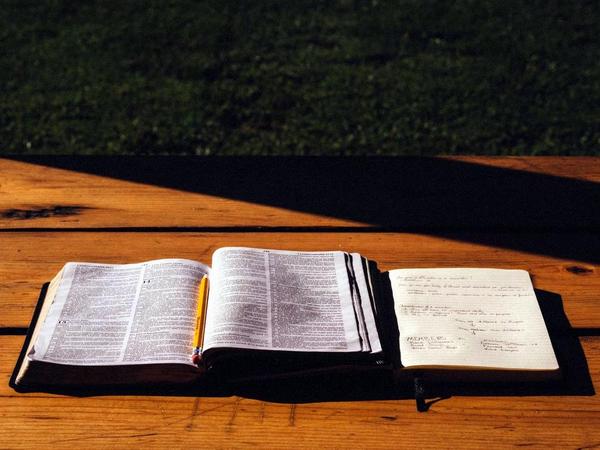
open Bible with notes Grieving the loss of a loved one or thing brings deep sorrow, and it can seem impossible in some cases. But by drawing close to God and taking practical steps each day to maintain your health, you can grieve healthily and come out stronger than ever.

Whether you're grieving the death of a loved one, the end of a friendship, or a shattered dream, there are no shortcuts through the pain. However, seeking God's presence can strengthen your faith because you rely on something bigger than your crushed spirit. And setting healthy goals can help you heal while boosting your confidence in the process. Here are some some practical tips for navigating grief.

Prioritize Quiet Time

First of all, as critical as it is to spend time with friends and family while grieving, no one can provide you with the comfort, grace, and wisdom that God can. Make sure you are making time to spend in His presence every day.

Devote time to prayer, and don't hold back your feelings or thoughts. Read the Bible at various points in your day for truth and wisdom for your situation. And consider keeping a journal where you write your most honest thoughts and emotions. No one ever has to read what you write, which means you can be raw. And you can also use your journal to set goals and track your progress.

Make Career Moves

Grief has a way of reminding us how short life is. If you are stuck in an overwhelming or unfulfilling job, this could be your chance to make a major change. Why not establish a path for a career you can be passionate about?

One practical step is to return to school for a bachelor's, master's, or doctorate. These days, many online programs allow you to earn a degree while still tending to your full-time job and other responsibilities.

Whether you are interested in business management, IT management, accounting, or any other field, you can earn an online business degree without leaving your house. Besides boosting your career prospects, achieving this goal could be a boon for your mental health.

Eat Whole Foods

It can be challenging to maintain a decent diet when you're grieving. Not only do anxiety and depression have a way of suppressing the appetite, but the physical symptoms of grief can sometimes make it hard to eat. When you have a craving, it might be for empty carbs and other comfort foods.

However, you must feed your body essential minerals and vitamins to function and keep up with grief's emotional and physical demands. Stick to lean proteins, healthy fats, fruits, vegetables, and other whole foods that will provide you with much-needed energy and benefit your long-term health.

Build a Fitness Routine

Regular exercise will not eliminate your grief, but it's a critical coping tool that can reduce depression, anxiety, and loneliness symptoms. The health benefits of maintaining a fitness routine are as broad and deep. Exercising can also provide opportunities to interact with others and keep your mind off of your grief for short moments. Fortunately, there are countless physical activities to try, including:
  • Walking
  • Running
  • Weightlifting
  • High intensity interval training (HIIT)
  • Swimming
  • Cycling
  • Recreational sports
The key is to find one or more activities that you enjoy and commit to doing them at least five days a week. Your mind, body, and soul will thank you for it.

Listen to More Music

Listening to music can help you battle anxiety, stress, depression, and other common grief symptoms. Immerse yourself in worship music throughout the day. Listen to it on your morning commute, as you relax at home, and while you go through your daily workouts. It will boost your mood and help you keep your mind on heavenly things.

If you are experiencing heavy grief, don't rely on yourself to get through it. And don't depend solely on your friends and family either. Seek God with everything you have, set healthy goals you can attain, and ask God for grace to move your life in the right direction. He will respond because He is faithful!

Sunday, November 11, 2018

Honoring our Veterans – Veterans Day Weekend 2018

Each year, November 11 is recognized as a day of solemn reflection throughout many nations in honor of those who bravely served them. The day is known by many names, including Armistice Day, Remembrance Day in British Commonwealth countries, and Veterans Day in the United States. This year also marks the 100 year anniversary of the armistice to end World War 1, signed between the allied countries and Germany at Compiègne, France on November 11, in 1918. The armistice went into effect at 11am Paris time, on the 11th hour of the 11th day of the 11th month.

In the United States this year, Monday, November 12 is set aside to commemorate and honor and recognize their service to the nation. Although we should honor our veterans every day, please make a special effort to thank all of those you know. Although most veterans don’t seek attention, it shouldn’t be difficult to find one. There are over 20 million former and active veterans in our country today. Even if you can’t thank them in person, please observe a moment to thank God for our brave men, women and their families.

Marine Corps Birthday 243rd Birthday

Coinciding with this Veteran’s Day weekend is the 243rd birthday of the US Marine Corps, whose origins trace from an October 1775 plan by the Continental Congress to use Marines to oversee a mission to intercept ammunition shipments from Britain during the Revolutionary War. The following month, a resolution was adopted that officially created a standing Marine Corps force on November 10, 1775, the date that became the USMC birthday. True to their humble roots, the Marine Corps Birthday is not a federal holiday, but observed only internally by the military branches; although some local government and civic organizations sometimes hold various events to honor the men and women of the Marines. The primary historical celebration is the traditional Marine Corps Birthday Ball. The first known Birthday Ball was held in 1925 Philadelphia, but is now held annually in our nation’s capital.

WWI Memorial Cross in Jeopardy

This Veterans Day Weekend also coincides with the recent Supreme Court’s agreement to hear arguments in the case of the Bladensburg Peace Cross. The dispute began in 2014 when members of the American Humanist Association filed a lawsuit to have the memorial removed, claiming it discriminates against soldiers who were not Christian. The humanists were later joined by the Council on American-Islamic Relations in their efforts to destroy the cross that has stood for almost 100 years, and was financed by the American Legion and private donors.

Stella Morabito at the Federalist has a must-read article in which she writes:

Sadly, precious few Americans today know a single thing about World War I. This is unconscionable, because we can still feel its aftershocks all over the world today. Forgetting our history has very damaging consequences if we ever hope to attain real progress in this world. And the point of war memorials is to remind us of such things, and to bid us never to forget.

So there is great poignancy in the timing of the Supreme Court’s recent agreement to consider the case of The American Legion et al. v. the American Humanist Association et al. The court will decide whether a World War I memorial in Bladensburg, Md., may remain standing, or if it constitutes an illegal mix of church and state. The American Legion is appealing the Oct 18, 2017, decision of the Fourth Circuit Court of Appeals that the memorial must go, which overturned a previous ruling allowing the memorial to stand.

Ms Morabito also explains the religious and historical aspects of why we need the memorial cross. Other excellent articles are from World Net Daily, a concise story on the SCOTUS taking the case, and the Daily Signal, who has the perspective from actual veterans on their thoughts about the efforts to remove the memorial cross.

Please be in prayer for the families of these veterans and all others involved in this very important religious freedom case.

WWI and Technology

WWI tank We’ll end this post on a lighter note. I was reading through this month’s issue of Electrical Construction and Maintenance (EC&M) Magazine, when I came across an article on Electricity and World War I. The subject of the article was the pivotal role that electricity played in the First World War. This article is also the source of the old photos used in this post.

The article notes some of the “firsts” that were introduced into combat during the First World War, in addition to rapidly developing electrical technology such as warplanes for bombing, steel helmets, blood banks, and guide dogs. In 1917 and 1918, the Holt Manufacturing Co and General Electric Co collaborated to invent the Holt gas-electric tank, the first prototype tank built in the United States. The tank used a gasoline engine connected to an electric generator to provide power to its various parts. Unfortunately, the tank was prone to overheating and lacking maneuverability, so the machine was the only one of its kind built. Fortunately, it was not needed since not a single American-made tank ever saw service in the war, and the US dominated technical development and manufacturing afterward.

In other technological gains, incandescent and carbon-arc searchlights became game changers for the allies. These lights were crucial for nighttime operations such as navigation, illuminating enemy ships, blinding enemy troops to allow torpedo boats to navigate closer to enemy ships, and for spotting and guiding warplanes during bombing raids (no GPS in those days).

WWI battleships also benefited greatly from advancements in electrical technology. Most devices and equipment were electrically power and operated, many by remote control. In addition, electricity was now being used to pivot and aim guns, and to lift ammunition from the magazines up to the guns.

The various weapons such as rifles, machine guns, artillery, mortars, and flamethrowers, led to millions of human injuries and created a medical crisis. In response, Marie Curie, a Polish and naturalized-French physicist and chemist who became the first woman to win a Nobel Prize, invented the “radiological car” (aka the “Curie car”). This vehicle contained an X-ray machine (a recently invented medical diagnostic tool) and photographic darkroom equipment. This invention allowed medics to bring this new technology to the battlefield. Ms Curie also incorporated an electrical generator into the car to power the X-ray machine.

WWI also resulted in the establishment of the first blood bank. Oswald Robertson, a US Army doctor came up with the idea of storing blood prior to the arrival of casualties. He established the first blood bank on the Western Front in 1917, from where it was transported to various medical stations as needed. This idea is credited with preventing thousands of deaths.

Finally, we mention that after the war, Dr Kurt Huldschinsky, a German pediatrician of Polish descent, noticed that many of his young patients were extremely pale. In addition, it is thought that about half of Berlin’s children suffered from rickets (a softening, weakening and/or deformation of skeletal bones). Since sunlamps had been used throughout the war to help treat soldiers’ wounds, the doctor began placing a few of the children under mercury-quartz lamps which emitted ultraviolet (UV) light. His patient’s bones slowly became stronger and the following summer (1919), he also began having them sit in the sun. The doctor’s research eventually led to the discovery that the process of Vitamin D strengthens the bones with calcium is triggered by UV light. Thus, God used the circumstances of the war to cure this children’s ailment.

In closing, we ask once again that we pray for, and honor all our veterans and their families.

Friday, December 9, 2016

3 Ways to Help a Person Recovering from Addiction

Guest Post by Sara at Educator Labs:

Note: The views and opinions expressed in this article are those of the author and may not necessarily reflect those of ad Dei Gloriam Ministries.


Watching someone you care about struggle with addiction is not easy. The process of getting help alone is difficult enough, and then you must watch your loved one cope with recovery. While recovery may be a step forward, it is also a very challenging time in the person’s life.

If you have never experienced addiction, you might feel as though you cannot help simply because you don’t understand what they are going through. However, you do not need to have similar experiences to help someone through a difficult time. Here are a few ways friends and family can help a person undergoing addiction recovery.

One of the most important steps you can take to help someone working through recovery is simply to check in once in awhile. If your loved one is still in treatment or if you don’t live nearby, regular phone calls or video chats can offer the support your loved one needs.

With the isolating nature of addiction recovery, it is important that friends and family take the time to stay in touch. Social isolation can easily become a reason for relapse and by simply picking up the phone, you can help prevent that.

Plan Beneficial Activities

There are many activities that prove quite beneficial for those recovering from drug addiction. Spending time with loved ones is an important aspect of avoiding social isolation during recovery, and by choosing your activities wisely, you’ll be doing even more to help them stay on the right path and discover positive coping strategies.

Exercise is a commonly used tool in various therapies as it can improve mental state and act as a positive coping mechanism. Due to the meditative aspect of the practice, yoga is one of the best options. You might also consider learning a new hobby or skill together such as a new language or maybe even ceramics.

Bring the Family Dog

Even if you can’t find a way to help by yourself, your dog already knows the best way to offer support. Dogs are naturally stress-relieving. They offer affection and encourage physical activity by playing. If your loved one is able, you may even want to suggest that they adopt a dog. The ability to come home to a loving pet is a great way to battle depression while their need for exercise and social interaction works to prevent isolation.

Of course, dogs are also a huge financial responsibility. They will require food, vet care, collars, leashes, beds, and a number of other items in order to live comfortably. So, in the meantime, try bringing your dog over for a visit, a walk, or just a game of fetch. Their enthusiasm and affection are enough to brighten any mood.

Though addiction can be frightening and the recovery process difficult, you are an important part of your loved one’s life. Your love, support, and compassion can make all the difference in a recovery simply by doing your best and caring.

Sunday, March 9, 2014

Relationship between Spiritual and Physical Fitness

In a recent article on maintaining good spiritual health, we drew many parallels between physical and spiritual activities. In reality, the two realms are inter-related and can greatly affect each other. Paul tells Timothy that “while bodily training is of some value, godliness is of value in every way, as it holds promise for the present life and also for the life to come” (1Tim 4:8 ESV). Paul is not denying the benefits of physical training as some have proposed. The Greek word for “training” is gymnasia (often translated “exercise”) from which we get “gymnasium”. The Greek translated “of some” (pros oligon) can also mean little, small or brief (as in time). The Greek (pros panta) translated “in every way” literally means “for everything” or “for always”, so in context, Paul is likely saying that exercise is beneficial for this brief lifetime, but spiritual training is much better since it has value for both this earthly life and for our eternal life.

Studies (and personal experiences) have shown that physical fitness (exercise and proper diet) contributes to increased discipline, mental alertness, better sleep, better memory retention, higher energy levels, lower rates of depression, decreased illness, increased production and many other general health benefits that can favorably affect our spiritual training. Likewise, a healthy spiritual life leads to a clear conscience (less stress) that generally benefits our physical lives.

Stress can negatively affect both our physical and spiritual well-being. In the physical realm, it can be caused by such things as financial problems, marital issues, job demands, illness, or numerous other situations. In the spiritual realm, stress is almost always caused by guilt, brought on initially by unconfessed sin. At times, guilt can even hang on long after we've repented and been forgiven, but we must learn to trust God and let it go.

This is not to say that all guilt is necessarily bad. Good guilt serves as an early warning system spiritually, just as does pain or discomfort to us physically. When we experience pain (or other abnormal symptoms) in our physical body, it alerts us that something is wrong. Depending on the severity, we may need to seek professional medical help to remedy the problem. If we continue to ignore them, much more serious problems would likely occur. Similarly, when we experience spiritual problems, the Holy Spirit convicts us of our sin (makes us feel guilty over our sin) so that we can turn to the Great Physician, confess our sin, and remedy our spiritual problem. If we continually ignore the conviction of the Spirit, our conscience can become seared and much bigger spiritual problems will develop.

Preferably however, we should not wait for a symptom to manifest itself. For this reason, many people have regular examinations by their doctor to discover and address any concealed physical issues before they develop into real problems. Spiritually, we should take the attitude of King David the Psalmist who wrote “Search me, O God, and know my heart; test me and know my anxious thoughts. Point out anything in me that offends you, and lead me along the path of everlasting life” (Ps 139:23-24 - NLT). When the Spirit’s “examination” turns up any spiritual problems, we should immediately confess and repent. Failure to do so will lead to diminished fellowship with God and even hinder our prayers (Ps 66:18). In almost all physical or spiritual cases, the earlier we detect any abnormalities, the easier the treatment and recovery.

In the end, whether physically or spiritually, we should do everything for the glory of God.

Then I acknowledged my sin to you and did not cover up my iniquity. I said, “I will confess my transgressions to the LORD.” And you forgave the guilt of my sin (Ps 32:5). If we confess our sins, he is faithful and just and will forgive us our sins and purify us from all unrighteousness (1Jn 1:9). So whether you eat or drink or whatever you do, do it all for the glory of God (1Cor 10:31).