Showing posts with label death. Show all posts

Sunday, August 9, 2026

Rebuilding Hope and Faith After Loss: A Guide for Christian Widows and Widowers

Webmaster Note: Guest Post by Sara Bailey from TheWidow. The views and opinions expressed in the article are those of the author, and may or may not necessarily reflect those of ad Dei Gloriam Ministries.

Christian widows and widowers who have moved beyond the first waves of grief often discover a quieter, harder ache: life after early grief can feel both empty and crowded with memories. Friends may assume the worst is over, yet the soul still wonders how to live with faith when the future looks nothing like the vows once spoken. There is a real tension between honoring spouse memory and longing for a hope for renewal that doesn’t feel like betrayal. Faith-centered grief recovery makes room for both love and longing. A meaningful life can grow again.

Read the entire article on our Original Blog.

Monday, July 4, 2022

Lost After the Loss of a Loved One? It May Be Time For a Move

Guest Post by Camille Johnson from The Bereaver Blog. The views and opinions expressed in the article and associated links are those of the author, and may or may not necessarily reflect those of ad Dei Gloriam Ministries. We have no relationship with any of the organizations linked within the article.


Image Source: Unsplash
Man Grieving on Couch Grieving the loss of a loved one or thing brings deep sorrow, and it can seem impossible in some cases. But by drawing close to God and taking practical steps each day to maintain your health, you can grieve healthily and come out stronger than ever.

While it’s reassuring to know this is all in God’s plan, and your church community can be the best support you can find at times like these, it may not feel that way in the moment. Suddenly finding yourself alone can be terrifying. Factor in the many changes that you’ll have to deal with at this time, and it may seem like an unbearable challenge. While it may seem drastic, after weighing the pros and cons, sometimes the best way to move on is to actually move.

Take good care of yourself

When the person you’ve shared your life with has passed away, even meeting daily needs can seem overwhelming. Take care of the body first–you’ll need to eat well, to exercise (even a walk around the block), and to try to get good sleep. It’s easy to fall into a funk, skipping the dishes and laundry, skipping meals. Make contact with friends and family who you won’t be embarrassed when they see that way, but who will also motivate you to get back up again. Even just calling someone sometimes can give you the perspective you need to take better care of yourself.

When you’re between houses, or if you’ve decided to move to a new town, don’t let your wellness visits lapse. Because you’re grieving you might miss some of the warning signs when it comes to your own health. If you haven’t been sleeping or eating well, this can exacerbate any health concerns.

Fortunately, you can book a virtual doc visit online if you have yet to establish care with a doctor in your new town. Simply search for "online doctors" or "online medical care" in your favorite internet browser. Online platforms make telehealth an easy option so you get the care you need. And whether you have insurance or not, you can still meet with an online physician to discuss your needs. Look for an option with same-day appointments.

Lighten possessions

Memories of your life partner will linger on, especially at home where you’re surrounded by their earthly belongings. You’ll undoubtedly go through a myriad of emotions, running the gamut from sadness to guilt. However, dealing with your late spouse’s possessions is a crucial part of letting go and moving on, and an unavoidable one at that.

In truth, this is an opportune time to declutter your own belongings and downsize. As this is an emotionally-charged task, it’s wise to enlist the help of a trusted friend or loved one, not just to do the heavy lifting, but also to give you comfort in the process. You might even find it’s an empowering part of the healing process.

As a rule of thumb, sort belongings into piles. While emotions may dictate that you hold on to collections and meaningful keepsakes, you also have to assess whether these will serve you or just add to clutter. It’s good practice to take photos of meaningful items or pass them on to loved ones, as well as keep what’s useful and truly priceless. The rest can be sold, donated, or thrown away.

Give yourself permission to start anew

Sometimes moving away mitigates grief. After all, it’s painful to return to an empty household that’s now devoid of a presence that was once constant. As daunting a decision as moving to a new home may be, it’s one that will save you money in the long run as living expenses decrease, which you can put forward for your future or use to offset the impact of a lost income.

It’s necessary to follow a few steps to ensure a financially sound decision. Take into account how much you’re likely to make in the sale of your home. Next, look at the costs involved in selling your home, buying a new one, moving expenses, and so forth. And while it’s a good idea to get help from people you trust or consult a professional like a financial advisor, remember that the decision is ultimately yours to make.

Prioritize your needs

Know that your safety and comfort are of the essence, especially if you depended on your late spouse for care. With that in mind, seniors sometimes do best in independent living. This option can mean less work because many facilities handle housekeeping and some health support. Independent living can also include a senior-friendly environment and social life. You may want to search the internet for more information regarding the advantages and disadvantages of assisted living.

The death of your spouse may give you a sense of an ending, but it’s undeniably also the start of a new chapter. There’s nowhere to go but forward. Let grief run its course and in due time, you’ll find the right decisions for your own future.

Sunday, April 3, 2022

How Goal-Setting Can Move You Through Grief

Guest Post by Lucille Rosetti from The Bereaver Blog. The views and opinions expressed in the article and associated links are those of the author, and may or may not necessarily reflect those of ad Dei Gloriam Ministries. We have no relationship with any of the organizations linked within the article.


Image Source: Unsplash
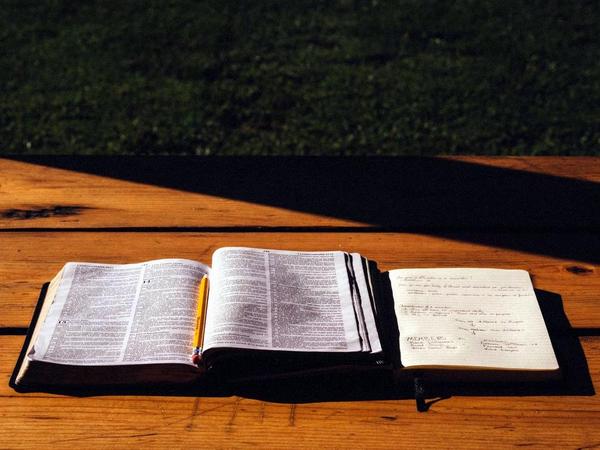
open Bible with notes Grieving the loss of a loved one or thing brings deep sorrow, and it can seem impossible in some cases. But by drawing close to God and taking practical steps each day to maintain your health, you can grieve healthily and come out stronger than ever.

Whether you're grieving the death of a loved one, the end of a friendship, or a shattered dream, there are no shortcuts through the pain. However, seeking God's presence can strengthen your faith because you rely on something bigger than your crushed spirit. And setting healthy goals can help you heal while boosting your confidence in the process. Here are some some practical tips for navigating grief.

Prioritize Quiet Time

First of all, as critical as it is to spend time with friends and family while grieving, no one can provide you with the comfort, grace, and wisdom that God can. Make sure you are making time to spend in His presence every day.

Devote time to prayer, and don't hold back your feelings or thoughts. Read the Bible at various points in your day for truth and wisdom for your situation. And consider keeping a journal where you write your most honest thoughts and emotions. No one ever has to read what you write, which means you can be raw. And you can also use your journal to set goals and track your progress.

Make Career Moves

Grief has a way of reminding us how short life is. If you are stuck in an overwhelming or unfulfilling job, this could be your chance to make a major change. Why not establish a path for a career you can be passionate about?

One practical step is to return to school for a bachelor's, master's, or doctorate. These days, many online programs allow you to earn a degree while still tending to your full-time job and other responsibilities.

Whether you are interested in business management, IT management, accounting, or any other field, you can earn an online business degree without leaving your house. Besides boosting your career prospects, achieving this goal could be a boon for your mental health.

Eat Whole Foods

It can be challenging to maintain a decent diet when you're grieving. Not only do anxiety and depression have a way of suppressing the appetite, but the physical symptoms of grief can sometimes make it hard to eat. When you have a craving, it might be for empty carbs and other comfort foods.

However, you must feed your body essential minerals and vitamins to function and keep up with grief's emotional and physical demands. Stick to lean proteins, healthy fats, fruits, vegetables, and other whole foods that will provide you with much-needed energy and benefit your long-term health.

Build a Fitness Routine

Regular exercise will not eliminate your grief, but it's a critical coping tool that can reduce depression, anxiety, and loneliness symptoms. The health benefits of maintaining a fitness routine are as broad and deep. Exercising can also provide opportunities to interact with others and keep your mind off of your grief for short moments. Fortunately, there are countless physical activities to try, including:
  • Walking
  • Running
  • Weightlifting
  • High intensity interval training (HIIT)
  • Swimming
  • Cycling
  • Recreational sports
The key is to find one or more activities that you enjoy and commit to doing them at least five days a week. Your mind, body, and soul will thank you for it.

Listen to More Music

Listening to music can help you battle anxiety, stress, depression, and other common grief symptoms. Immerse yourself in worship music throughout the day. Listen to it on your morning commute, as you relax at home, and while you go through your daily workouts. It will boost your mood and help you keep your mind on heavenly things.

If you are experiencing heavy grief, don't rely on yourself to get through it. And don't depend solely on your friends and family either. Seek God with everything you have, set healthy goals you can attain, and ask God for grace to move your life in the right direction. He will respond because He is faithful!

Saturday, November 14, 2020

When the Skies of November Turn Gloomy

Guest Post by Jim Beatty – a fellow Servant of Jesus Christ… a sinner who has turned away from a sinful lifestyle… writing in hopes of throwing somebody a life ring.

Webmaster Note: This past week marked the 45th anniversary of the event of which Jim writes. He sent the article late last year, but we saved it until now for posting. The image below comes from the US Corps of Engineers and is in the public domain.


Most of us know about Veteran’s Day and I’m sure everyone knows when Thanksgiving is. Those dates are usually marked right on the calendar for us, because they are important days that we should remember. But there’s another important day in November that’s not generally marked on our calendar, and that is November 10th, the anniversary of the sinking of the Edmund Fitzgerald in 1975.

The Fitzgerald wasn’t one of the thousand foot “super tankers”, but a pretty big ship on the Great Lakes, with a length of almost 750 feet. Being what’s known as a “straight decker”, the Fitzgerald was perfect for hauling iron ore pellets, as she was that fateful night. Gordon Lightfoot took poetic liberties when he sang “They left fully loaded for Cleveland” when in fact, they left fully loaded for Zug Island, which is near Detroit, but I suppose you just can’t make Zug Island rhyme.

Captain McSorley was a veteran sailor with over 40 years experience and had taken command of the Fitzgerald only a few years earlier. It’s ironic that this was scheduled to be his final journey before retirement.

Lake Superior that night had waves of 35’, and the wind was about 60 miles per hour. The weather was so bad that the Soo Locks had been closed and the Coast Guard had issued a warning for all vessels to take safe harbor and to remain at anchor until the storm had passed.

The Captain of the Fitzgerald radioed that his ship was listing. They were taking water across the deck and both radars were out. The Steamship Arthur Anderson was following some distance behind, trying to guide them by radio to the safety of Whitefish Bay.

We know how the story ends. The Fitzgerald sunk suddenly... very suddenly in about 600 feet of water and all the men on board died.

I was working on the freighters in those days. In fact, we were safely at anchor in the lee of a small island on Lake Huron. But I remember from our lifeboat training that we were told, “There’s no need to panic, there’s no hurry, you don’t have to rush, it takes at least 45 minutes for a ship to sink. There’s plenty of time to get the lifeboats ready.”

But that’s not how it happened on the Fitzgerald that night. In fact, about a year later, I met a man who said he was working on the Arthur Anderson that night. He said it happened so quickly that with one sweep of the radar screen she was there, and the next sweep she was gone.

Gordon Lightfoot hit it square on when he sang, “The lake it is said... never gives up her dead... when the skies of November turn gloomy”.

You know, I have to wonder how many, if any, of those men had come to Christ at some time before that final journey. And I have to wonder how many of those men cried out to Christ with their last breath as they sank into that icy water.

Sometimes we get so caught up with the cares of the world and our own “stormy situations” that we forget about our relationship with God.

“Oh, you don’t understand! I’ve got to work a lot of overtime to pay off my student loans... or whatever. I don’t have time for that religious stuff right now”, or so we reason.

Others may be caught up in a lascivious lifestyle. Drinking and carousing, carelessly singing, “eat drink and be merry, for tomorrow we die!” Those poor spirits never even see the need to change their course, much less to get the lifeboats ready!

Others may think they can just put it off, “Oh, I’m a good guy and people like me. I mean, I go to church, you know... or at least sometimes. It’s not like you have to really follow all that stuff. Besides, I can always repent on my death bed. Certainly Jesus will wait for ME, won’t he?”

The trouble is, as the Edmund Fitzgerald shows us, sometimes the calamities of life happen so suddenly that we don’t always have time to even LOOK for the lifeboats. Proverbs 27:1 says, “Don’t boast about tomorrow, for a man doesn’t know what a day might bring”.

So the question is, “When should I change my course... when should I get my lifeboat ready?” Paul tells us in 2nd Corinthians 6:2, “And he said, in the favorable time, I listened in the favorable day, you needed salvation and I helped. Behold, THIS is the favorable time. Behold, THIS is the day of salvation”.

If there is anyone reading this message and has come to a point in your life where you see the need to change your course, you see that it’s time to get the lifeboat ready. I urge you to seek out competent biblical teaching, believe in the Word and repent from the world. Be baptized and receive the free gift of the Holy Spirit.

I urge you to seek out and build your relationship with the One who can calm the stormy sea. And I urge you to do this while it is still the favorable day, before one of life’s calamities can strike!

Saturday, February 28, 2015

The Family Chain

Between ice storms this week, my brothers and I made a quick trip to West Texas where our family bid a temporary goodbye to our uncle Magel. He was a great family man who is much loved by his surviving wife of over 50 years, and by his son, daughters and many grand-kids. I had not seen many of them for decades, and others I actually met for the first time. He left a great legacy by faithfully passing on his Christian values to his family.

A few years ago, I wrote an article on the differing attitudes toward death of Christians as opposed to that of non-believers. It was certainly difficult to temporarily lose Magel, but was made somewhat easier by the fact that we are assured of seeing him again one day. We only buried Magel’s earthly body. His spirit is still alive in the presence of our Lord as he awaits his final resurrected body.

In the funeral program, the family included a poem written by Ron Tranmer who has published numerous encouraging and inspirational poems for many occasions. I’d like to share this poetry for all those who are missing family members and are looking forward to being together again.

Broken Chain
(revised version)

We little knew that day
God would call your name.
In life we loved you dearly.
In death we do the same.

It broke our hearts to lose you
but you didn’t go alone,
for a part of us went with you
the day God called you home.

We’re left with loving memories
of the time we had with you,
and feel your love around us
in everything we do.

Our family chain is broken
and our lives are not the same,
But as God calls us one by one
the chain will link again.

Wednesday, December 7, 2011

Yet Shall He Live

One of my spiritual heroes is AW (Aiden Wilson) Tozer.  He served as pastor of several churches for about 45 years, including the Southside Alliance Church in Chicago for 30 years.  He then became pastor of Avenue Road Church of Toronto in 1959 before dying suddenly of a heart attack in 1963.

Pastor Tozer never went to college or seminary, and had no formal religious training, yet by spending hours upon hours with an open Bible before God, he was able to speak and write with such conviction that he became one of the most often quoted Christians of the past 50 years.

Here is a short except from one of his sermons about death, based up the Scripture verse, He that believeth in me, though he were dead, yet shall he live (Jn 11:25- KJV).
This may sound strange-but it is a fact that death is not the worst thing that can happen to a believing Christian.

I can recall the first time I heard that statement, in a quiet conversation with Harry M. Shuman, for many years the president of the international Christian and Missionary Alliance. He was a soft-spoken yet forceful man of God, rich in the wisdom of God’s Word. We were talking of the serious issues of life and death. When he had something especially important to say, Dr. Shuman had an unusual way of lowering his voice and tilting his head just a bit. I can see him yet as he looked out from under his shaggy brows straight into my eyes.

"Remember, Tozer," he said, "death is not the worst thing that can happen to a person!".

For the Christian, death is a journey to the eternal world. It is a victory, a rest, a delight. I am sure my small amount of physical suffering has been mild compared to Paul’s, but I feel as Paul did: "I desire to depart and be with Christ, which is better by far!" (Php 2:23)
Pastor Tozer is speaking, of course, of physical death.  All people, both believers and nonbelievers, will experience physical death unless we’re still alive here on Earth when Jesus returns.  However, only nonbelievers (those without a personal relationship with Jesus Christ) will experience the second death - an eternity in hell separated from God.  This eternal state is also known as "eternal death" or "spiritual death".  This should not be confused with the state of being "spiritually dead", the current condition of a nonbeliever, and the former condition of believers prior to being regenerated (made alive in Christ) by the grace of God (Eph 2:1-10).

Many of us have heard the old saying, "Born once, die twice; but born twice, die once".  Christians have been born twice, that is “born again” or “born from above” (Jn 3:3-7), so only Christians will die only once (physically), while unbelievers will experience both physical and spiritual death.  It has rightly been said that "one can't kill a Christian - but can only change his or her address".

For those wanting more info on how to avoid the second death, please read our How to Be Sure You’re Going to Heaven article.

A few years ago, we also wrote a related article on the Differing Views of Death between believers and unbelievers.  We welcome you to check it out.

Saturday, July 31, 2010

Memories of Aunt Louise

A couple of weeks ago, Aunt Louise (my mom’s older sister) left this temporary life to go to her permanent home in heaven. I had not seen her in a while, so many of my memories are somewhat old and faded. Yet, because of her great love for her family, she always kept up with everyone else. Not a single birthday, graduation or any other special event would pass without us receiving a card at the very least. To a young man on a very hectic schedule, these cards and occasional calls brought a certain sense of normality, like an anchor in a turbulent sea. Unfortunately, she was an anchor that I all too often took for granted.

Aunt Louise and my mother, along with five other siblings, grew up in a small farm house in a rural area of Northeast Texas. As a kid, I used to love to play around the old barn, then one day found out that this “old barn” was the home in which they were actually raised. It was only used as a barn after my grandparents later built another house on the land. This other farm house became the family gathering place for Christmas and other special occasions.

Louise and my mom were typical sisters, always arguing among themselves but fiercely loyal to each other, probably because they were so much alike. During family gatherings, my mom and dad would sometimes get into petty (often good natured) arguments, and Louise would almost always take my dad’s side (along with her youngest sister Claudene). I suspected she did this just to agitate mom, and it usually worked. You could tell my mom was perturbed when she started calling her “Norma Louise”.

Read the entire Memories of Aunt Louise article, including additional pictures.

Thursday, May 13, 2010

Safe in the Arms of Jesus

I wanted to work on the Book of Ruth in our Interpreting the Books of the Bible section, but kept feeling compelled to write this article on death and life instead. This subject is way out of my comfort zone, but I knew from past experience that I wouldn’t get anything else done until I had completed this post.

To provide a little background on my mental state, we’ve been receiving frequent news that our son’s marine unit in Afghanistan continues to sustain numerous casualties, including several on Mother’s Day alone. We hope our readers are praying daily for the brave men and women risking their lives to protect our country and to secure freedom for other parts of the world. It is unthinkable that anyone can face death without knowing whether his or her future is eternally secure. After my father died, I wrote an article contrasting the differing views of death between believers and non-believers.

Now, we turn to the subject of this post, a baby named Smith, born to parents Kori and Jon up in McKinney (TX) on April 29, weighing only 24 oz. After clinging valiantly to life for almost two weeks, Smith went home to Jesus on May 10. I was alerted to their situation by email from a friend of a friend of a friend, so I don’t know Kori, Jon and family personally, but they have been a real inspiration the past few weeks. Through the various difficulties of this ordeal, Jon shared Smith’s brief, but miraculous and inspiring life on his blog.

I kept thinking, what does one say to such a courageous couple, or to anyone else who has just lost a loved one? Let me preface these comments by saying that I’m no counselor, so these are just my personal thoughts. As Christians, we’re always tempted to quote Scripture (particularly Ro 8:28) in a well-meaning effort to ease the person’s grief, or to defend God. This is good to a point, but I believe it’s sometimes best just to grieve along with the person and let them know you care. You can then speak of the goodness of God as the healing process begins, which will be sooner or later in different instances. In Jon and Kori’s case, it is apparent that they never questioned God’s goodness, but this still does not ease the pain of their loss.

I’ve met a few well wishers with the attitude that, we should not grieve for a loved one because “they’re in a better place”. Fortunately, these folks (almost always meaning well) are usually a small minority. While the destination of the departed is a great comfort, it is entirely biblical to mourn. Jesus Himself wept at the death of His friend Lazarus, even though He knew that He would shortly raise him from the dead (Jn 11:32-36).

As some of my regular readers may know, I love the old hymns and often research their author and some of the fascinating circumstances surrounding their writing. Earlier today, I came across an old hymn by Frances (Fanny) Crosby, who is credited with writing thousands of hymns even though she was blind. Ms Crosby caught a slight cold at about six weeks of age. A country doctor, who (it was later learned) was not qualified to practice medicine, was called because their family physician was away. He recommended the use of hot poultices, which practically destroyed her eyesight. When the doctor learned of the results, he left town, never to be heard of again. Ms Crosby later said "I have not, for a moment, in more than eighty-five years, felt a spark of resentment against him; for I have always believed that the good Lord, in His infinite mercy, by this means consecrated me to the work that I am still permitted to do”.

In 1859, a child was born to Fanny and her husband, but the child died in infancy, and to this day, no one knows whether it was a boy or a girl. Fanny refused to speak of it, even to her closest friends and relatives, except to later say, “God gave us a tender babe… and soon the angels came and took the infant up to God and His throne”.

On April 30, 1968, about a decade after the infant’s death, a Christian musician, Dr WH (Howard) Doane, knocked on Fanny’s door and said “I have exactly forty minutes before my train leaves for Cincinnati. I need some words for this melody”, then began humming a tune. Fanny quickly prayed, went to work and twenty minutes later, dictated the words to Dr Doane just in time for him to catch his train. This brief collaboration produced one of Ms Crosby’s most beloved hymns, Safe in the Arms of Jesus, which became a great comfort to thousands who had lost a loved one, especially a child.

Safe in the arms of Jesus, safe on His gentle breast,
There by His love o’ershaded, sweetly my soul shall rest.
Hark! ’tis the voice of angels, borne in a song to me.
Over the fields of glory, over the jasper sea.

Refrain:
Safe in the arms of Jesus, safe on His gentle breast
There by His love o’ershaded, sweetly my soul shall rest.

Safe in the arms of Jesus, safe from corroding care,
Safe from the world’s temptations, sin cannot harm me there.
Free from the blight of sorrow, free from my doubts and fears;
Only a few more trials, only a few more tears!

(Refrain)

Jesus, my heart’s dear Refuge, Jesus has died for me;
Firm on the Rock of Ages, ever my trust shall be.
Here let me wait with patience, wait till the night is over;
Wait till I see the morning break on the golden shore.

(Refrain)

We must not assume that God allowed Ms Crosby to lose her child for the sole purpose of providing comfort to others, but we can say that God can use all our experiences, good and bad, to minister to others in similar situations.

Tuesday, June 30, 2009

Fascination with Celebrities

In the past week or so, we’ve witnessed the death of several celebrities such as Ed McMahon, Farrah Fawcett, Michael Jackson, and even pitchman Billy Mays. First and foremost, we need to remember that these were real people with real families that we need to keep in our prayers. Many celebrities, despite their fame and fortune, tend to be very sad and lonely individuals, usually a far cry from their public images.

It’s very interesting, and revealing to watch the reactions to these events from various sources within our modern society. The so-called “mainstream” media virtually ignored the others in preference to Mr Jackson, since he was arguably the most popular and bizarre. Not including commercials, each major network typically broadcasts 22 minutes of what they call “news” during their nightly newscasts. The Media Resource Center reported that, on Friday evening (the next day after Mr Jackson’s death), ABC devoted all but 1:03 to Mr Jackson. NBC gave us 1:22 of other news while Katie Couric over at CBS managed to squeeze in 34 seconds for a total of 2:59 vs 63:01 devoted to Mr Jackson. "OK, right after this station break, we'll bring you an exclusive interview with a man who once petted a dog that was owned by a person who lived in the same town as one of Michael's third-cousins, and how this encounter changed his life."

Read the entire Fascination with Celebrities article including what drives our obsession with the rich and famous.